


Radio-Vision: The Shift to Visual Has Already Happened
A hundred years ago, an inventor called television "radio-vision" because he understood that audio alone was never going to be enough and the same shift is happening in podcasting right now. This post breaks down why the move to visual is already over and what it actually takes to win in a world where the entry bar is low but the performance bar has never been higher.

Before I get into my thesis, here are four things you can do today to sharpen your visual storytelling. No budget required, no team meeting needed. Just do them.
- Put an executive on camera this week. Not a polished brand spot, a real person talking about what they actually think. Consumers trust people, not logos. The brands I work with at Magnet figured this out years ago. Most haven't caught up yet.
- Watch your last video asset on mute and count the seconds before the first cut. You have 1.7 seconds on a phone screen before someone decides to scroll. If you're opening with a logo animation or a corporate intro, you're designing for a world that no longer exists.
- Google yourself, then prompt yourself. Search your brand in ChatGPT or Perplexity. If you don't show up, your content isn't structured for AI discovery. 93% of AI search sessions end without the user ever visiting a website. That's where the next attention war is being fought.
- Find one brand outside your industry doing something with video you wish you'd thought of. The biggest innovations in visual storytelling right now aren't coming from inside your category. Goldman Sachs is humanizing complex financial products through executive video. Amazon is pioneering shoppable content at scale. Whatever your industry, the playbook you need probably already exists somewhere else.
Okay. Now let's get into it.
The Guy Who Invented Television Called It "Radio-Vision"
Before it was called "television," one of its inventors had a different name for it.
In 1925, Charles Francis Jenkins stood in front of a small audience and demonstrated something he called "radio-vision."
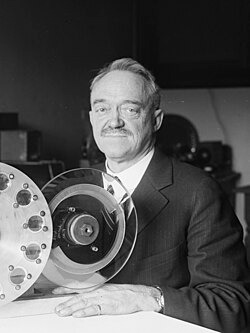
His thesis was simple: audio alone wasn't enough. People needed to see the story.
He was right. And a hundred years later, we're watching the exact same shift happen with podcasting.
The Numbers Aren't a Trend. They're a Verdict.
53% of new weekly podcast listeners now prefer watching a podcast over just listening, up from 30% just three years ago. YouTube has become the number one podcast platform in America. A video platform is winning the audio game. Spotify has over 330,000 video podcasts and just announced a partnership with Netflix to distribute them later this year.
Audio-only podcast creation grew 4% last year. Video podcast creation grew 28%.
The data isn't subtle. Video podcasts get 4.2x more comments than audio-only versions, viewer retention is 2.7x higher on mobile, and more than 70% of video podcast viewers watch in the foreground, meaning you actually have their attention.
Jenkins saw it a century ago. The platforms are confirming it now. If your story doesn't work visually, it's not competing.
But here's where most brands make their first mistake.
They hear "go visual" and they book a camera crew. They set up a backdrop, they brief a host, they hit record. And what comes out is fine. Perfectly watchable. Completely forgettable.
Because going visual was never the hard part. Winning in visual is something else entirely.
Going Visual Isn't Just Adding a Camera to the Room
You have 1.7 seconds on a phone screen before someone decides whether to stop or scroll. And 85% of mobile video is watched without sound, which means if your story doesn't work on mute, it doesn't work at all.
That's the real brief. Design for 1.7 seconds. Design for silence. Lead with your most visually arresting frame and front-load the value. Travel brands especially have an inherent advantage here because their product IS the visual, and yet most are still wasting those first seconds on logo animations and corporate intros.
The gap between a video podcast that earns tens of thousands of incremental viewers and one that flatlines isn't about production budget. It's about craft, and most of it happens in places nobody thinks about until they're already behind.
Thumbnail strategy alone can make or break performance. Mr. Beast figured this out years ago and built an empire partly on obsessive thumbnail testing. There are people in the production world who do just this. Just thumbnails.
Then there's the hook, those first three seconds that determine whether someone scrolls past. The edit pacing. The clip strategy. The caption design. The chapter markers. Most brands treat all of that as an afterthought.
Which is exactly why so many of them end up in the graveyard.
So What Killed 4.5 Million Podcasts?
Nearly 5 million podcasts exist. Only about 436,000 are still actively producing. The graveyard is massive.
AI made it easy for anyone to hook up a microphone, generate content, run it through an editing tool, and post it to Spotify. The barrier to entry dropped. The barrier to attention went way up.
And audiences noticed. 88% of Americans say it's harder now than a year ago to tell what's real online. Half of all consumers say they're more skeptical of online content than they were just a year ago. That skepticism isn't a problem for brands that invest in quality. It's an opportunity.
Because here's the thing: authenticity is winning. 61% of viewers now prefer natural lighting and candid visuals over studio polish. But authenticity doesn't mean amateur. There's a real difference between content that feels human and content that just looks cheap. The brands building traction are the ones who know what makes someone stop, watch, and come back, and they've built a real system around it.
The middle is disappearing fast. You're either building something with real craft behind it or you're adding to the graveyard.
That's what I've been exploring in conversations across finance, tech, and travel, and what I'll keep unpacking in the next post, where I go deeper into what this shift really means as AI continues to reshape both how content gets made and how audiences find it.
Want to continue the conversation? Reach me directly at mvicent@magnetmediafilms.com








We tell stories that matter
For over 20 years, Magnet’s mission has been to tell stories that matter so that we live in a more empathetic and just world. We intentionally pursue this mission by:
Having our teams and work represent the broader culture
Choosing projects that have positive societal impacts
Creating a community of thought sharing and leadership


Contact us
Let us know what you want to know!
